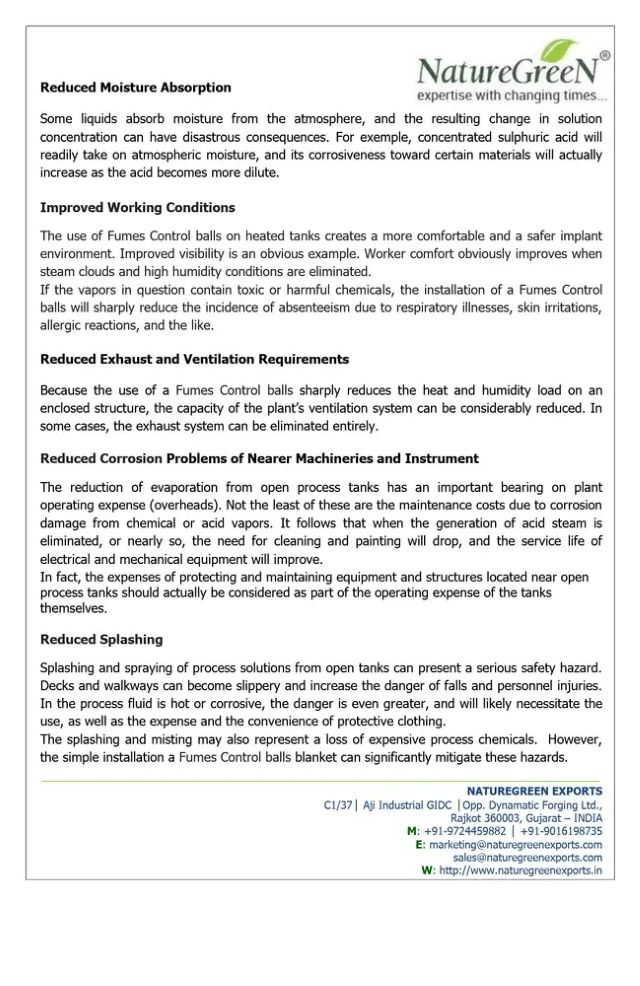
Industrial surface treatment, chemical etching, and heated process baths require effective surface blanketing to minimize evaporative chemical losses and thermal dissipation. However, selecting between solid plastic balls and hollow floating spheres requires understanding distinct mechanical stresses, operating temperatures, and operational workflows. This technical guide compares solid virgin polypropylene (PP) balls against hollow HDPE spheres, detailing chemical compatibility, thermal limits (up to 105°C), drag-out behavior, and practical dipping line considerations.
1. Structural Anatomy: Solid Molding vs Hollow Blow Molding
The core distinction between solid and hollow floating balls lies in their internal geometry and manufacturing processes:
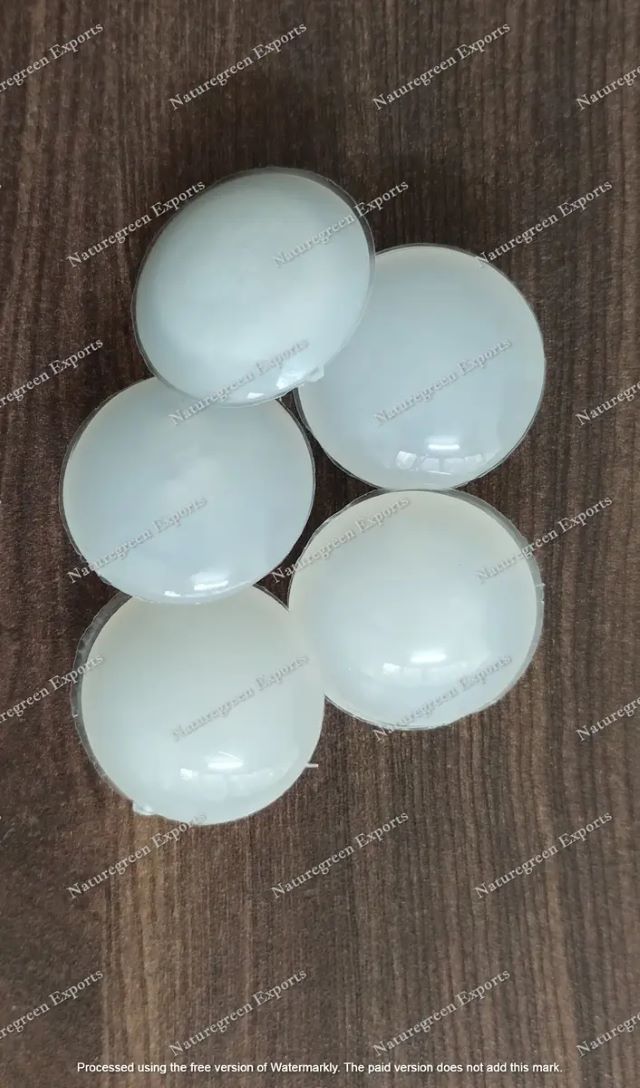
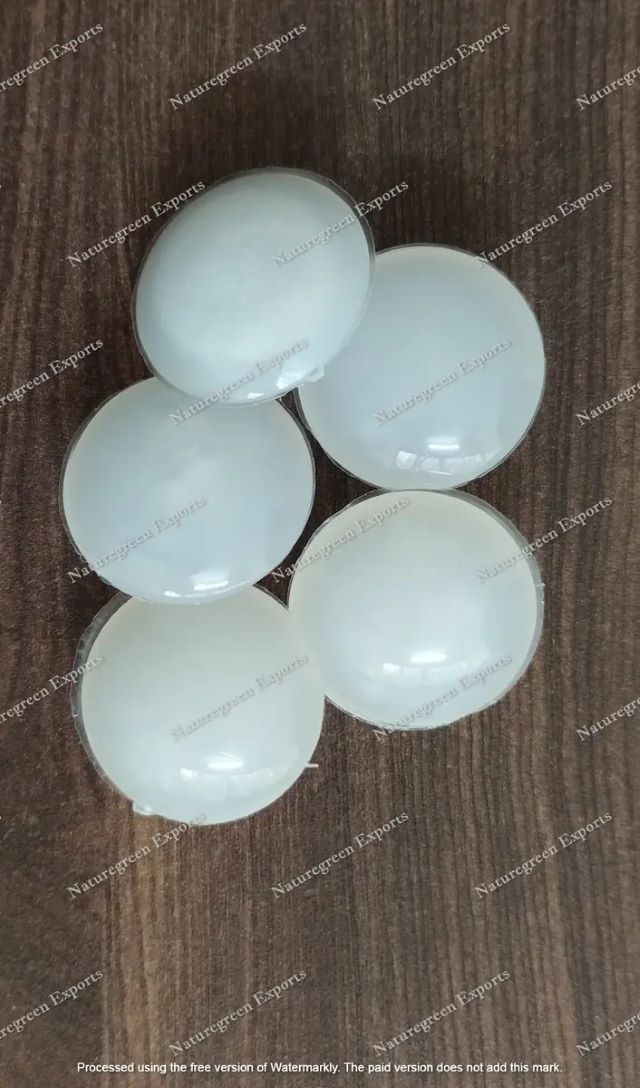
- Solid Floating Balls (32mm Elliptical): Precision compression or injection molded from solid virgin Polypropylene without internal voids. Although polymer density is approximately 0.90–0.91 g/cm³, the balls naturally float due to being lighter than water/acid solutions while presenting a completely solid, impenetrable cross-section.
- Hollow Floating Spheres (25mm to 200mm): Blow molded or rotational molded with a sealed internal air cavity. While providing higher individual buoyancy per unit weight, hollow balls rely on thin outer walls (1.5mm to 3.5mm) to maintain hermetic integrity.
In harsh chemical environments with continuous thermal cycling (e.g., heated anodizing or chrome tanks cycling from ambient to 90°C), hollow balls can suffer from internal pressure differentials. Hairline weld line fatigue can cause acid ingress, filling the hollow interior and causing the ball to sink to the tank bottom.
2. Polymer Chemistry: 100% Virgin PP vs HDPE
Material selection directly dictates long-term chemical durability in aggressive industrial reagents:
| Property | 100% Virgin Polypropylene (PP) | High-Density Polyethylene (HDPE) |
|---|---|---|
| Continuous Operating Temp | Up to 105°C (Boiling chemicals) | -30°C to +80°C (Ambient & moderate) |
| Tensile Strength at 80°C | High (Maintains structural stiffness) | Moderate (Softens under sustained heat) |
| Resistance to Concentrated Acids | Excellent (H2CrO4, HCl, H2SO4, HNO3) | Excellent for dilute acids & ambient storage |
| UV Weathering Resistance | Moderate (Requires indoor/process use) | Exceptional (With Carbon Black UV stabilizer) |
| Recommended Use Case | Heated chemical baths & electroplating | Outdoor reservoirs, lagoons, ETP/STP ponds |
View specifications for 32mm Virgin PP Solid Elliptical Balls and Polypropylene (PP) Hollow Float Balls.
3. Temperature & Chemical Resistance Matrix
In process chemical tanks, chemical attack accelerates dramatically with temperature. The table below illustrates the chemical compatibility threshold of virgin PP solid balls across industrial reagents:
| Chemical Solution | Concentration | Operating Temp | Virgin PP Solid Balls | HDPE Hollow Balls |
|---|---|---|---|---|
| Chromic Acid (H2CrO4) | 250 – 400 g/L | 55°C – 65°C | Recommended (100% Inert) | Not Recommended (>50°C degradation) |
| Hydrochloric Acid (HCl) | Up to 37% | Ambient – 60°C | Recommended | Recommended up to 45°C |
| Sulfuric Acid (H2SO4) | 15% – 98% | Up to 95°C | Recommended (Up to 105°C) | Moderate (Dilute only) |
| Caustic Soda (NaOH) | Up to 50% | Up to 100°C | Recommended | Recommended up to 60°C |
| Raw Water / Ash Slurry | Standard pH | Ambient (-30°C to +50°C) | Acceptable | Preferred (UV Black HDPE) |
4. Workpiece Dipping Dynamics & Drag-Out Carryover
In automated metal finishing and rack electroplating lines, parts are continually submerged into active chemical baths and hoisted into subsequent rinse tanks. This workflow imposes strict mechanical requirements on the floating cover:
- Zero Workpiece Entrapment: 32mm solid elliptical balls feature smooth, seamless convex geometry. Parts cannot scoop up or trap solid balls in internal cavities or blind holes.
- Eliminating Drag-Out Carryover: Hollow balls with textured parting lines or minor defects can trap drops of expensive plating solution in crevices. Solid PP balls drain completely within seconds, preventing expensive chemical drag-out into rinse tanks.
- Self-Healing Blanket Restoration: As the parts rack passes through the surface, the solid balls part smoothly and immediately flow back to close the vapor barrier.
5. Application Selection Rules for Plant Engineers
Use the following engineering rules to choose the correct floating ball system:
- Rule 1: If the tank operating temperature exceeds 70°C, specify 100% Virgin PP Solid Balls or PP Hollow Balls. Never use standard HDPE above 75°C.
- Rule 2: If parts, baskets, or automotive components are dipped into the liquid, specify 32mm Virgin PP Solid Elliptical Balls to avoid hollow ball flooding and liquid carryover.
- Rule 3: For large outdoor lagoons, raw water holding basins, and wastewater ponds, specify UV-stabilized Black HDPE Hollow Floating Balls (50mm–100mm) for maximum area coverage per kilogram of polymer.
Key Engineering Takeaways
- Solid balls cannot crack, flood, or sink during thermal cycling, whereas hollow balls can fail in heated chemical tanks.
- Virgin Polypropylene (PP) provides continuous heat resistance up to 105°C, making it ideal for boiling acid baths.
- Smooth 32mm solid elliptical geometry eliminates chemical drag-out and prevents balls from becoming trapped in dipping racks.
- HDPE hollow balls remain the preferred solution for outdoor ambient reservoirs requiring UV carbon black stabilization.
Frequently Asked Questions
Virgin PP has a specific gravity of ~0.905 g/cm³. It floats readily in water (1.0 g/cm³) and dense acid/caustic solutions (1.1 to 1.4 g/cm³), but will sink in hydrocarbons or solvents with specific gravity below 0.90.
Multiply tank length (m) by width (m) by 1,160 units/m² for a single layer of 32mm solid balls, or 2,300 units/m² for a high-performance double layer.
Because virgin PP is completely chemically non-reactive, solid balls do not degrade, soften, or require replacement under normal chemical bath operation.
Get Chemical Compatibility & Sizing Recommendations
Send your chemical bath composition, dimensions, and operating temperatures to NatureGreen technical engineers for immediate sizing.
Related Technical Insights