In chemical manufacturing, metal finishing, food processing, and industrial washing operations, maintaining process tanks at elevated temperatures (60°C to 100°C) constitutes a major continuous energy expense. Uncovered liquid surfaces act as thermal radiators and high-rate evaporators, dumping up to 70% of total boiler and electric immersion heater energy directly into the plant atmosphere. This engineering guide details the thermodynamic mechanisms of surface heat dissipation, provides energy loss calculation formulas, and demonstrates how solid polypropylene floating blankets cut energy consumption by 30% to 50%.
1. Thermodynamics of Process Tank Heat Dissipation
Heated open process tanks lose thermal energy through four simultaneous physical pathways:
- Evaporative Heat Loss (Qevap): Water and chemical vaporization consumes the latent heat of vaporization (~2,260 kJ/kg). At temperatures above 60°C, evaporative mass transfer accounts for 50% to 70% of total heat loss.
- Surface Radiation (Qrad): Governed by the Stefan-Boltzmann law, radiant heat emission increases with the fourth power of absolute temperature (T4). Uncovered water behaves as a near-blackbody radiator (ε ≈ 0.96).
- Convective Surface Loss (Qconv): Natural and forced air currents across the open tank strip heated air boundary layers, driving continuous convective dissipation.
- Conductive Tank Wall Loss (Qcond): Heat transfer through tank sidewalls and floor (typically only 15%–25% of total losses when walls are insulated).
While plant engineers routinely insulate tank sidewalls, leaving the top surface open allows the largest thermal drain to operate unimpeded.
2. Quantifying Heat Loss & Power Consumption
Total surface heat loss from an uninsulated open bath can be estimated using the empirical equation:
Qtotal = Qevap + Qrad + Qconv = A × [hc (Ts - Ta) + εσ (Ts4 - Ta4) + Lv · mevap]
The table below details measured surface power dissipation from 1 m² of open water surface across operating temperatures (at 20°C ambient air and 0.2 m/s air velocity):
| Tank Temperature | Surface Heat Loss (kW / m²) | Daily Energy Loss (kWh / m² / day) | Annual Cost (@ ₹8/kWh per m²) |
|---|---|---|---|
| 50°C (122°F) | 0.85 kW/m² | 20.4 kWh/m²/day | ₹59,568 / m² / year |
| 65°C (149°F) | 1.80 kW/m² | 43.2 kWh/m²/day | ₹126,144 / m² / year |
| 80°C (176°F) | 3.85 kW/m² | 92.4 kWh/m²/day | ₹269,808 / m² / year |
| 95°C (203°F) | 7.90 kW/m² | 189.6 kWh/m²/day | ₹553,632 / m² / year |
3. Thermal Floating Blanket Engineering Mechanism
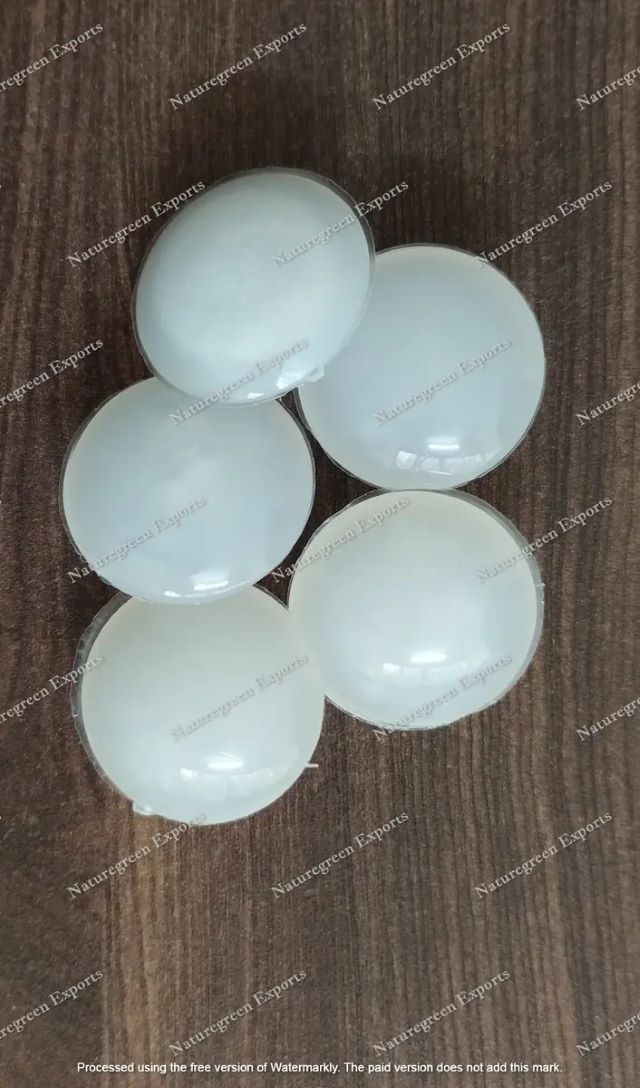
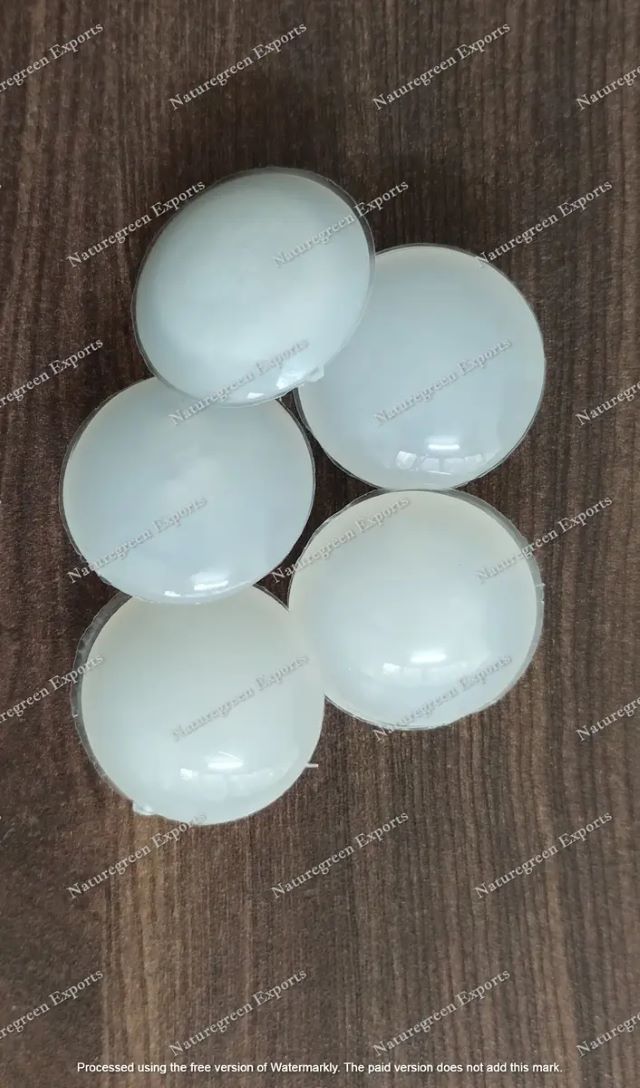
Deploying a dense layer of 32mm Virgin PP Solid Elliptical Balls creates a physical thermal insulation barrier directly on top of the hot liquid:
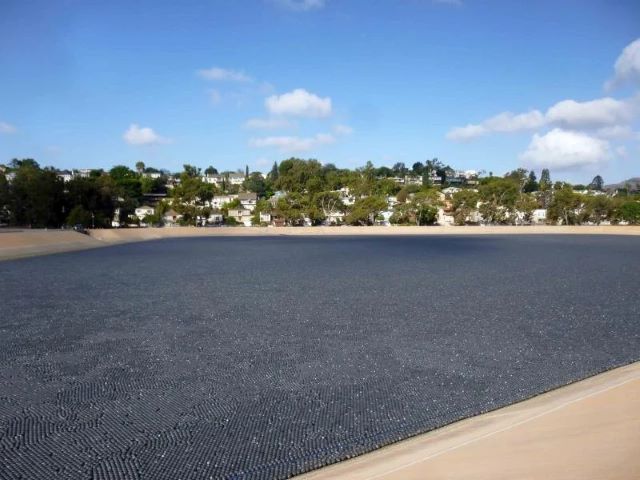
- Suppression of Evaporative Mass Loss: By blanketing 91% (single layer) to 98% (staggered double layer) of the surface, liquid vaporization is reduced by up to 85%+, capturing latent heat.
- Thermal Conduction Barrier: Polypropylene has an extremely low thermal conductivity (k ≈ 0.12 W/(m·K)), acting as an effective insulating blanket that keeps heat inside the liquid.
- Dead Air Space Trapping: The spherical/elliptical geometry traps stagnant, saturated air pockets between ball contact points, virtually eliminating convective air currents at the liquid surface.
Review engineering specifications on 32mm Virgin PP Solid Elliptical Balls.
4. Energy & Financial ROI Analysis
Consider a medium electroplating or pickling line with two heated chemical tanks (total surface area = 8.0 m²) maintained at 75°C, operating 16 hours/day, 300 days/year:
| Metric | Uncovered Tanks | With Solid PP Floating Blanket |
|---|---|---|
| Surface Power Loss | 2.80 kW / m² | 1.40 kW / m² (50% reduction) |
| Total Hourly Power Loss (8 m²) | 22.4 kW | 11.2 kW (11.2 kW net savings) |
| Annual Energy Consumed (4,800 hrs) | 107,520 kWh | 53,760 kWh |
| Annual Electricity Cost (@ ₹8/kWh) | ₹860,160 / year | ₹430,080 / year |
| Net Annual Financial Savings | — | ₹430,080 Saved / Year |
| Capital Cost of Floating Blanket | — | Approx. ₹35,000 – ₹45,000 |
| Capital Payback Period | — | Under 6 Weeks (<1.5 Months) |
5. Plant Integration & Thermal Efficiency Checklist
To maximize thermal savings across your process lines:
- Deploy Double Layers for High Temperatures: For tanks operating above 75°C, install a double staggered layer of balls (~2,300 balls/m²) to achieve maximum 98% thermal insulation.
- Reduce Thermostat Deadbands: With lower heat dissipation, heating elements cycle less frequently, providing more uniform bath temperature and improved product quality.
- Downsize Local Exhaust Ventilation: Reduced chemical vapor emission allows plant operators to modulate LEV exhaust fan dampers, cutting HVAC and blower motor power.
For complete plant engineering audits, consult our Acid Mist & Fume Suppression Solutions.
Key Engineering Takeaways
- Uncovered heated process tanks (60°C–95°C) lose 50%–70% of total energy through surface evaporation and radiation.
- A single to double layer of solid PP floating balls reduces surface heat loss by 30% to 50%.
- Typical capital payback periods for floating thermal blankets are under 6 to 8 weeks based on electric power and boiler fuel savings.
- Lower heat loss provides stable chemical bath temperatures and extends heating element operational lifespans.
Frequently Asked Questions
Yes. 100% virgin PP has a continuous temperature rating of 105°C and melting point above 160°C. Standard heater baffles ensure safe clearances during operation.
Yes. Chemical vapors and acid aerosols are condensed against the bottom of the balls and returned directly into the bath, saving significant chemical replenishment costs.
Yes. They prevent severe convective heat dumping in cold ambient environments, keeping process fluids at target temperatures with minimal heater runtime.
Cut Process Heating Power Costs Today
Send your process tank dimensions and operating temperatures to NatureGreen for a detailed thermal energy savings calculation.
Related Technical Insights