Heated chemical surface finishing lines—including hard chrome plating, sulfuric acid anodizing, and hydrochloric acid pickling—generate aggressive airborne aerosols and corrosive fumes. Toxic acid mists (such as hexavalent chromium Cr(VI), HCl, and H₂SO₄) pose severe occupational health hazards to plant personnel, accelerate structural corrosion across factory superstructures and overhead cranes, and cause substantial chemical replenishment and heating energy expenses. This comprehensive engineering guide examines aerosol generation mechanisms, regulatory exposure limits, and how solid virgin polypropylene floating blankets suppress 80% to 90% of toxic fumes at the liquid surface.
1. Aerosol & Acid Mist Generation Mechanics
Acid mist generation in surface treatment tanks is driven by energetic gas evolution at the electrodes during electrolytic processes. In hard chrome electroplating, cathode efficiency is notoriously low (typically 12%–15%), meaning that over 80% of the applied electrical current is consumed by hydrogen evolution at the cathode and oxygen evolution at the lead/tin anodes.
As these gas bubbles rise through the heated chromic acid electrolyte (typically operated at 55°C–65°C) and burst violently at the liquid-air interface, they shatter the surface film into microscopic liquid droplets (0.5 to 10 microns in diameter). These fine aerosols become entrained in thermal updrafts, forming a persistent toxic acid fog above the tank.
Similar aerosol generation occurs in:
- Hot Dip Galvanizing & Steel Pickling Lines: Hydrochloric acid (HCl) and sulfuric acid (H2SO4) tanks releasing hydrogen gas during metal dissolution.
- Copper & Nickel Electrorefining Baths: Acidic sulfate electrolytes operating at elevated temperatures (60°C–70°C).
- Bright Dipping & Chemical Etching Tanks: Concentrated nitric and hydrofluoric acid mixtures releasing nitrogen dioxide (NOx) and acid vapors.
2. Occupational Health Standards & Structural Corrosion
Regulatory authorities worldwide enforce stringent Permissible Exposure Limits (PEL) on airborne acid aerosols. Hexavalent chromium, Cr(VI), is a classified Group 1 human carcinogen with an OSHA PEL of 5 µg/m³ (8-hour TWA) and a CPCB action level requiring rigorous source suppression.
Uncontrolled acid fumes cause severe industrial damage:
- Workplace Health Hazards: Chronic inhalation causes nasal septum ulceration, occupational asthma, and severe skin dermatitis.
- Catastrophic Structural Corrosion: Acid vapors attack roof trusses, electrical switchgear, busbars, and overhead crane hoist cables, leading to high maintenance overhead and safety hazards.
- High Scrubber Operating Costs: Local exhaust ventilation (LEV) hoods and wet packed-bed fume scrubbers must run at high airflow velocities (often >15,000 CFM per line), consuming massive electrical fan power and continuous caustic soda (NaOH) neutralization chemical feeds.
3. Physics of Solid Polypropylene Floating Blankets
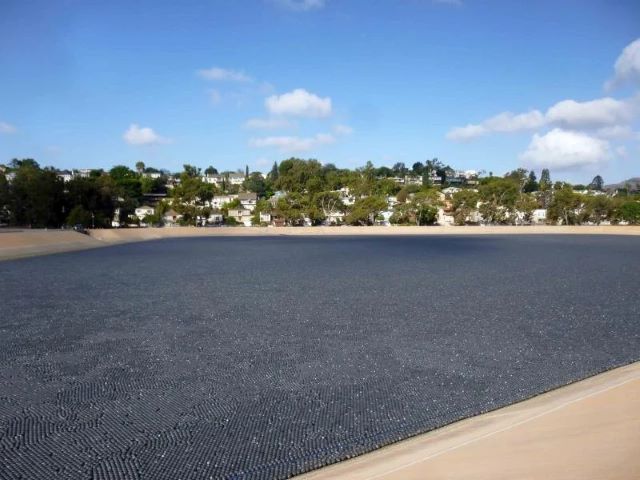
Rather than relying solely on high-powered exhaust fans to pull acid mist away after it enters the workplace atmosphere, source suppression using floating solid polypropylene balls stops aerosol formation at the liquid surface.
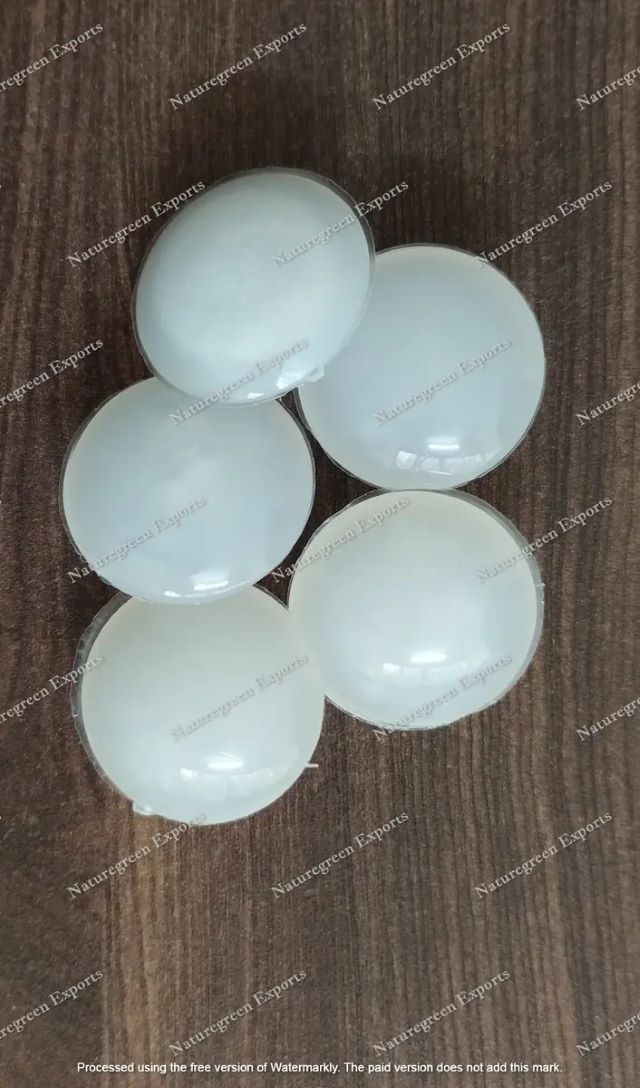
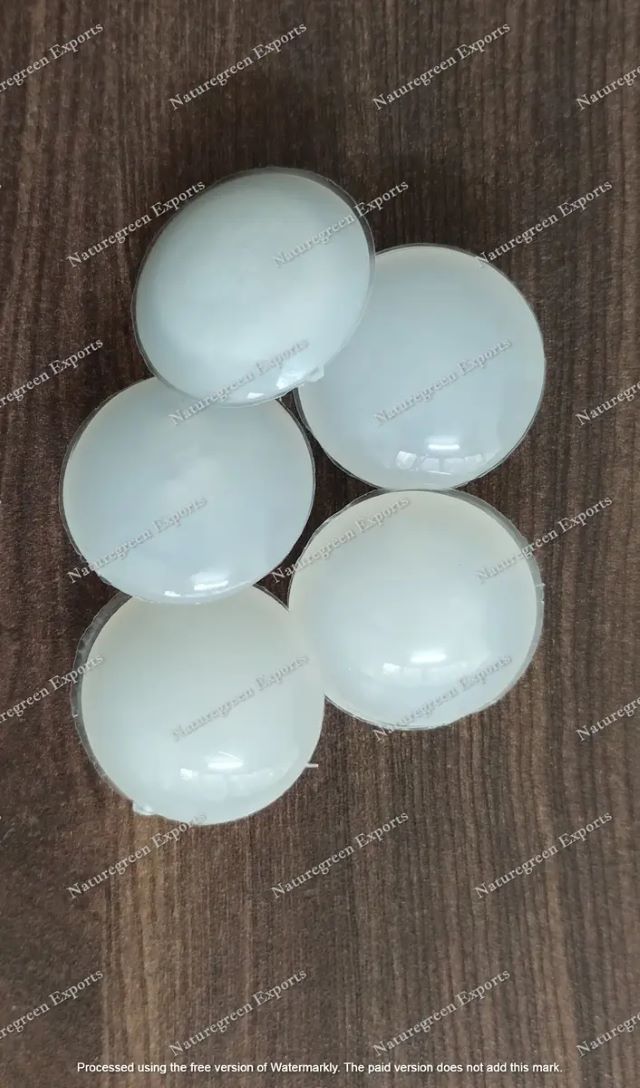
When deployed across the chemical tank, 32mm solid virgin PP elliptical balls form a continuous, self-healing floating blanket. The mechanism operates through three distinct physical phenomena:
- Bubble Deceleration & Inertial Impaction: Rising gas bubbles burst against the bottom curved surfaces of the floating balls. The kinetic energy of the liquid droplets is absorbed, and liquid drains back into the bath rather than becoming airborne aerosol.
- Thermal Condensation Boundary: The floating blanket forms an insulating vapor barrier, reducing surface evaporation and condensing rising chemical vapors back into liquid droplets.
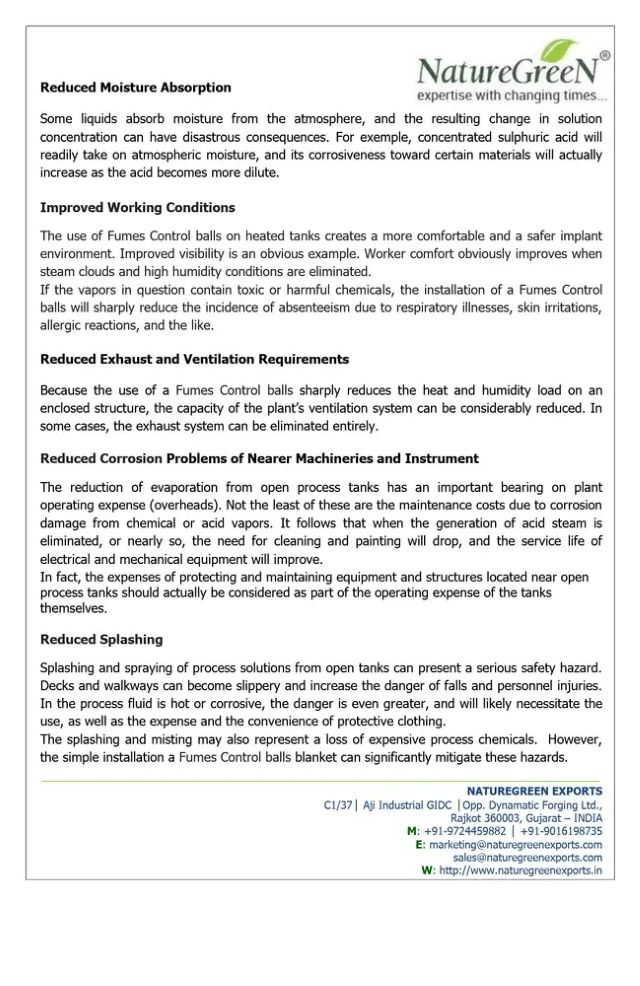
- Suppression Efficiency: Verified testing proves an 80% to 90% reduction in airborne acid mist emissions and a 30% to 50% cut in surface heat loss.
Explore full product specifications for 32mm Virgin PP Solid Elliptical Balls and Acid Mist & Fume Suppression Balls.
4. Operational & Energy Savings in Plating Plants
| Operational Parameter | Uncovered Plating Tank | With 32mm Solid PP Floating Blanket |
|---|---|---|
| Acid Mist / Fume Emission | 100% (High aerosol generation) | Reduced by 80% – 90% |
| Heating Energy Consumption | 100% (High surface radiation/evaporation) | Reduced by 30% – 50% (Fast payback) |
| Chemical Drag-out / Top-up | Frequent chemical loss via vapor venting | Significantly reduced; condensed back into bath |
| Exhaust Fan / Scrubber Load | Maximum blower capacity required | Lower face velocity needed; reduced power consumption |
| Workpiece Dipping Interference | None | Zero interference (Self-healing blanket) |
5. Dipping Line Implementation & Best Practices
A frequent concern among plating plant managers is whether floating balls interfere with hoist racks and automated dipping lines. NatureGreen's 32mm Solid Elliptical Balls are engineered specifically to eliminate dipping interference:
- Self-Healing Fluid Movement: When a rack of parts or automotive components is lowered into the tank, the smooth solid balls part effortlessly and close back together as the rack submerges, maintaining a complete seal.
- Zero Cavity Liquid Entrapment: Unlike hollow balls that can crack, flood with acid, or trap liquid inside crevices, 100% solid virgin PP balls have zero hollow interior and cannot trap electrolyte, preventing drag-out carryover between process tanks.
- Continuous 105°C Thermal Rating: Manufactured from 100% pure virgin polypropylene without fillers, withstands boiling chromic, nitric, hydrochloric, and sulfuric acids up to 105°C continuous operating temperature.
For engineering solutions tailored to electroplating facilities, see our Acid Mist & Fume Suppression Solutions Guide.
Key Engineering Takeaways
- Electrolytic gas evolution in plating tanks generates aggressive acid aerosols (Cr(VI), HCl, H2SO4) under 10 microns.
- Uncontrolled acid mists cause severe worker respiratory hazards and corrode overhead crane rails, trusses, and switchgear.
- 32mm solid virgin PP elliptical balls absorb bubble bursts and condense vapors, slashing acid mist escape by 80%–90%.
- The solid elliptical geometry allows workpiece racks to dip and lift seamlessly with zero liquid drag-out or hollow ball flooding.
Frequently Asked Questions
Hollow balls can develop hairline stress cracks, fill with toxic acid, sink to the bottom, or trap liquid that gets dragged into rinse tanks. Solid virgin PP balls cannot crack, flood, or trap liquid, providing 100% reliability.
A standard single-layer blanket requires approximately 1,160 units of 32mm solid balls per square meter. A double layer (approx. 2,300 units/m²) is recommended for heavy-evolution hard chrome tanks.
Yes. Made from 100% virgin polypropylene (PP), they are chemically inert to concentrated chromic, hydrochloric, nitric, and sulfuric acids up to 105°C continuous operating temperature.
Upgrade Plating Workplace Safety & Reduce Heating Costs
Consult with NatureGreen technical engineers for custom sizing and chemical compatibility assessments for your electroplating and pickling baths.
Related Technical Insights