Selecting the appropriate thermoplastic piping system for industrial chemical drainage, wastewater conveyance, and specialized aquatic filtration requires careful evaluation of mechanical toughness, low-temperature ductility, chemical resistance, and jointing integrity. While Polyvinyl Chloride (PVC) and Chlorinated Polyvinyl Chloride (CPVC) are common in domestic plumbing, Acrylonitrile Butadiene Styrene (ABS) delivers critical engineering advantages in heavy-duty commercial applications. This technical guide provides piping engineers and EPC contractors with a rigorous comparison of ABS, PVC, and CPVC material properties, joint mechanics, and application suitability.
1. Polymer Chemistry & Molecular Morphology
The performance differences between ABS and vinyl polymers stem directly from their molecular composition:
- Acrylonitrile Butadiene Styrene (ABS): A terpolymer combining three distinct monomers:
- Acrylonitrile: Imparts chemical resistance, hardness, and thermal stability.
- Butadiene: Synthetic rubber elastomeric segments that absorb impact energy and prevent brittle fracture.
- Styrene: Provides surface gloss, structural rigidity, and ease of solvent fusion.
- Polyvinyl Chloride (PVC): A rigid homopolymer prone to brittleness under mechanical shock or low temperatures unless modified with plasticizers (which can leach over time).
- Chlorinated Polyvinyl Chloride (CPVC): PVC with post-chlorination increasing heat resistance, but retaining a rigid, notch-sensitive molecular matrix susceptible to shatter upon impact.
2. Mechanical Toughness & Sub-Zero Impact Resistance
The single greatest operational distinction between ABS and PVC/CPVC is impact resistance and low-temperature ductility. When standard PVC drops below 10°C, it becomes highly notch-sensitive; accidental impacts from tools, vehicle wheels, or water hammer shockwaves can cause catastrophic shattering.
| Mechanical Property | Industrial ABS (110mm) | Rigid PVC (Schedule 40/80) | Industrial CPVC |
|---|---|---|---|
| Notched Izod Impact (23°C) | 250 – 350 J/m (Exceptional ductility) | 40 – 80 J/m (Moderate) | 50 – 90 J/m (Moderate) |
| Notched Izod Impact (-20°C) | 120 – 180 J/m (Retains toughness) | <20 J/m (Extreme shatter risk) | <20 J/m (Extreme shatter risk) |
| Operating Temp Range | -40°C to +60°C | 0°C to +60°C | 0°C to +90°C |
| Density / Weight | 1.05 g/cm³ (Lightweight) | 1.40 g/cm³ (33% heavier) | 1.55 g/cm³ (48% heavier) |
| Thermal Expansion (mm/m/10°C) | 0.9 mm | 0.6 mm | 0.7 mm |
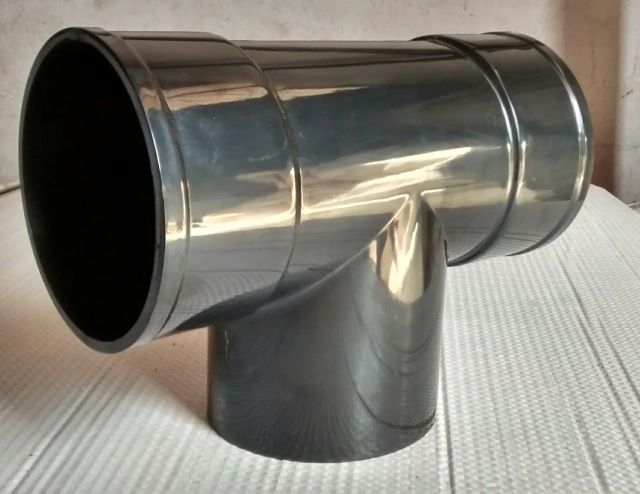
Explore NatureGreen heavy-duty ABS 90° & 45° Elbow Fittings and ABS Equal & Reducing Tee Fittings.
3. Temperature & Pressure Operational Limits
ABS piping is engineered primarily for non-pressure gravity drainage, low-to-medium pressure circulation lines (up to PN 6 / PN 10 rating), and chemical venting. While CPVC is favored for hot pressurized domestic water (>70°C), ABS is the undisputed material of choice for industrial gravity chemical discharge lines operating between -40°C and +60°C where freeze-thaw cycles or mechanical shocks occur.
4. Chemical Compatibility: ABS vs PVC vs CPVC
| Chemical Media | Industrial ABS | PVC | CPVC |
|---|---|---|---|
| Dilute Mineral Acids (HCl, H₂SO₄ <30%) | Excellent | Excellent | Excellent |
| Caustic Alkalis (NaOH, KOH up to 50%) | Excellent | Good | Good |
| Saline / Marine Brine Solutions | Exceptional (Zero corrosion) | Good | Good |
| Industrial Wastewater / Slurries | Superior abrasion resistance | Prone to erosion | Prone to erosion |
| Aromatic Solvents (Acetone, Benzene) | Not Recommended (Solvent attack) | Poor | Poor |
For chemical drainage design, review our Chemical Drainage & Wastewater ABS Piping Solutions Guide.
5. Solvent Welding Dynamics & Installation Best Practices
Joining 110mm ABS fittings requires single-step ABS solvent cement (MEK/acetone base with dissolved ABS resin):
- True Chemical Weld: The solvent cement dissolves the mating surfaces of the pipe and fitting socket. When joined, the polymer chains interlock, forming a monolithic chemical fusion stronger than the parent pipe.
- No Primer Required: Unlike PVC/CPVC which requires harsh purple etching primers to soften the rigid surface, ABS solvent cements chemically fuse directly to the pipe.
- Smooth Hydraulic Bore: The mirror-smooth interior of molded ABS fittings (C = 150 Hazen-Williams friction factor) prevents biofilm slime accumulation and scale buildup.
Review full sizing across all 7 industrial application matrices in our ABS Industry Application Matrix.
Key Engineering Takeaways
- ABS terpolymer contains elastomeric butadiene rubber, providing superior impact resistance (300+ J/m) compared to brittle PVC.
- ABS maintains mechanical ductility down to -40°C, eliminating shatter hazards in cold industrial environments.
- Single-step solvent welding creates a monolithic chemical fusion without requiring aggressive etching primers.
- ABS is 33% lighter than PVC, significantly easing handling and overhead pipe installation on industrial pipe racks.
Frequently Asked Questions
Standard PVC cement will not weld ABS. To transition between ABS and PVC, use specialized transition cement (ASTM D3138) or mechanical flanged adapter fittings.
Yes. 100% virgin ABS contains zero plasticizers or heavy metal stabilizers, making it completely non-toxic and inert for Recirculating Aquaculture Systems (RAS) and Koi ponds.
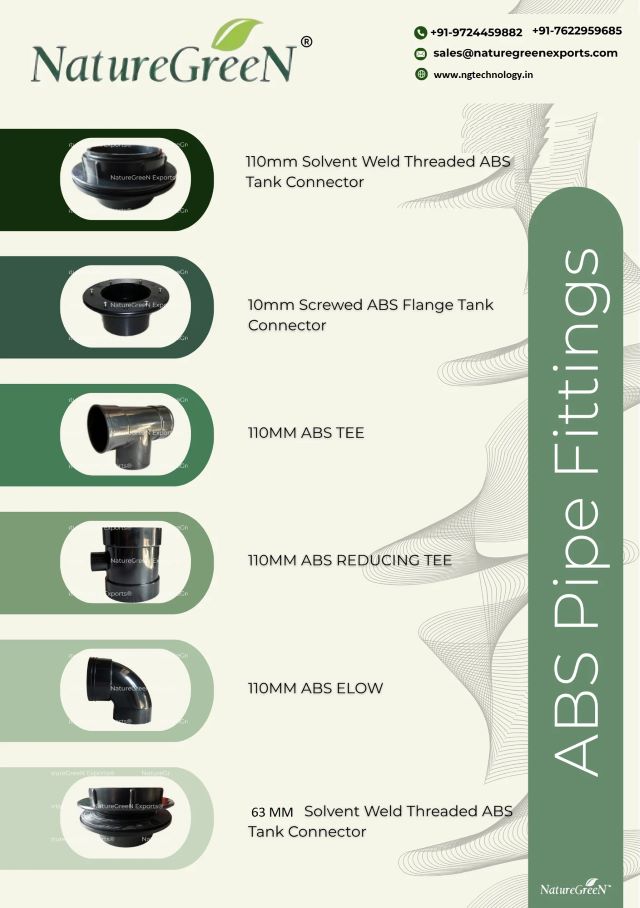
NatureGreen manufactures high-precision 110mm nominal outer diameter fittings (elbows, tees, reducers, and tank bulkhead adapters) according to standard metric drainage specifications.
Upgrade Your Chemical Drainage & Filtration Piping
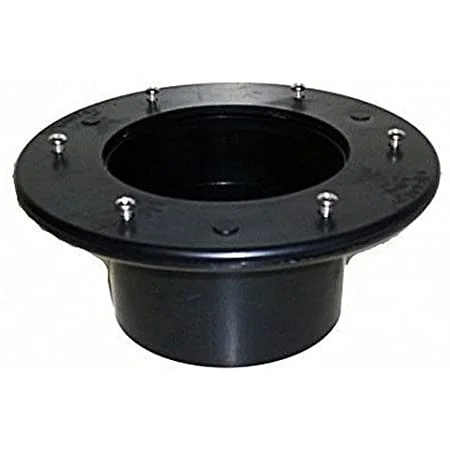
Explore NatureGreen's complete range of 110mm heavy-duty ABS elbows, tees, reducers, and bulkhead flange adapters.
Related Technical Insights