Recirculating Aquaculture Systems (RAS), commercial fish hatcheries, public oceanariums, and high-end Koi pond filtration systems demand specialized hydraulic piping designs. Unlike standard domestic plumbing, aquatic life-support systems require high volumetric flow rates at low hydraulic head, non-toxic polymer certification, smooth internal bores that prevent biofilm clumping, and robust resistance to synthetic sea salts and bio-clogging. This engineering guide details gravity drainage calculations, drum filter connection manifolds, and material selection using 110mm ABS piping systems.
1. Hydraulic & Biological Requirements in Aquatic Systems
Modern intensive aquaculture and Koi pond filtration operate on high water turnover rates (cycling the entire system volume once every 60 to 120 minutes). The piping infrastructure must satisfy strict operational criteria:
- Zero Heavy Metal & Chemical Leaching: Fish and delicate aquatic larvae are acutely sensitive to heavy metal stabilizers (lead, tin) and phthalate plasticizers commonly found in low-grade PVC piping.
- Ultra-Low Hydraulic Head Loss: High turnover rates require low-pressure, high-flow pumping. Every unnecessary elbow restriction or rough pipe wall increases pump electrical kilowatt consumption 24 hours a day, 365 days a year.
- Resistance to Biofouling & Settling Sludge: Fish feces and uneaten feed solids must remain in suspension until reaching mechanical drum or sieve filters without settling in pipe dead zones.
2. Gravity Flow vs Pump-Fed Plumbing Architecture
In high-efficiency RAS and Koi filtration, gravity-fed bottom drain systems are universally preferred over pump-fed designs:
| Feature | Gravity-Fed System (Preferred) | Pump-Fed System |
|---|---|---|
| Solids Preservation | Intact solid waste flows by gravity into mechanical filter | High-speed pump impeller purees fish waste into fine colloidal particles |
| Filtration Efficiency | High (Drum filter easily captures large solids) | Low (Colloidal solids pass through screens, elevating turbidity) |
| Piping Diameter Required | 110mm (4-Inch Nominal) standard | 50mm – 75mm pressure pipe |
| Pumping Energy Efficiency | Lowest head loss; low-wattage pumps | Higher head loss; elevated electricity bills |
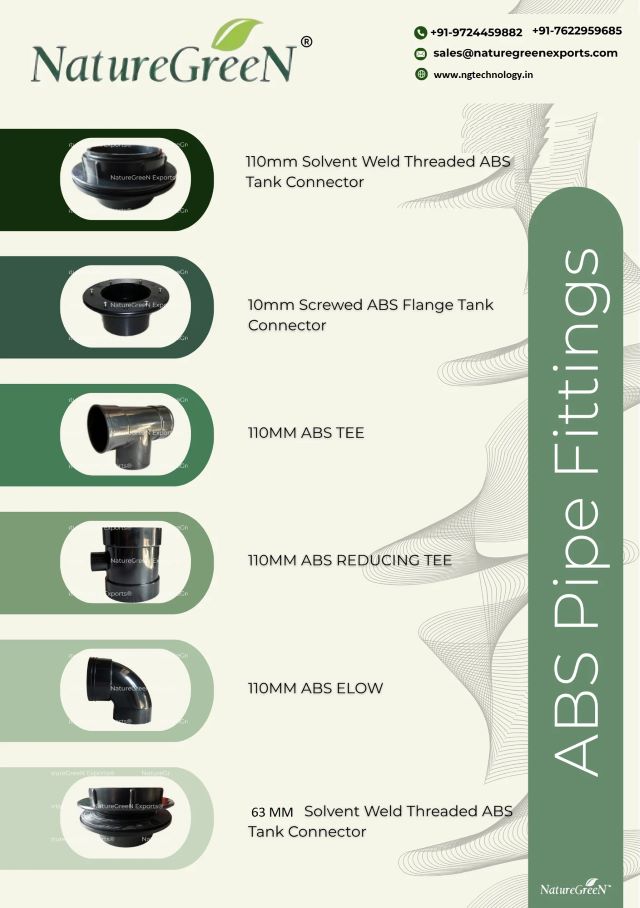
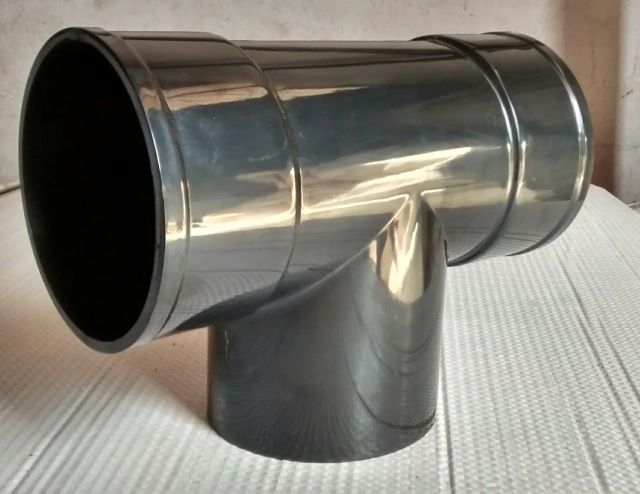
Explore ABS 90° & 45° Elbow Pipe Fittings and ABS Equal & Reducing Tee Fittings for high-flow manifolds.
3. Drum Filter & Bottom Drain 110mm Manifold Design
To plumb a commercial rotary drum filter or vortex settlement tank:
- 110mm Bottom Drain Lines: Multiple 110mm bottom drains collect heavy settleable solids. Use large-radius 45° elbows and swept bends rather than sharp 90° tees to minimize hydraulic friction.
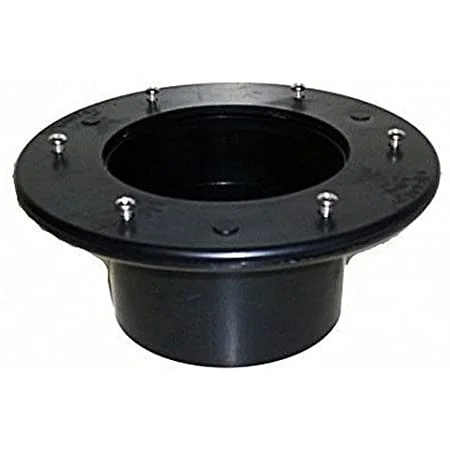
- Tank Wall Flange Adapters: Penetrate drum filter inlet chambers using 110mm ABS Flanged Tank Adapters with EPDM gaskets, tightened with specialized ABS Spanner Wrenches.
- Waste Sludge Discharge Lines: Connect backwash spray troughs to 110mm gravity waste drainage lines for automated solids ejection.
4. Material Safety & Heavy Metal Toxicology (ABS vs PVC)
Purity of plastic polymer is a matter of life and death in aquaculture:
- ABS Non-Toxic Guarantee: 100% pure virgin Acrylonitrile Butadiene Styrene contains zero plasticizers, zero stabilizers containing lead or barium, and zero toxic biocides. It is certified non-toxic to sensitive marine and freshwater species.
- Zero Brittle Fracture: ABS pipes resist impact from dropped tools or accidental kicks during routine maintenance without cracking.
- Saline & Ozone Compatibility: Impervious to high-salinity synthetic seawater in marine aquariums and resistant to ozone gas dosing in protein skimmer contact columns.
5. Hydraulic Flow Sizing & Self-Cleaning Velocity Rules
To prevent solid settling in bottom drain lines, maintain a self-cleaning flow velocity between 0.6 m/s and 1.2 m/s:
| Pipe Size | Recommended Flow Rate (m³/hr) | Flow Rate (Litres / min) | Velocity (m/s) |
|---|---|---|---|
| 110mm ABS Pipe (Standard) | 10 to 18 m³/hr per line | 165 to 300 L/min | 0.6 to 1.1 m/s (Ideal self-cleaning) |
| 110mm Dual Drain Manifold | 20 to 36 m³/hr | 330 to 600 L/min | Parallel 110mm runs into filter |
For complete application matrices across Koi, RAS, Hydroponics, and Aquariums, consult our ABS Pipe Fittings Industry Target Matrix.
Key Engineering Takeaways
- Aquaculture and RAS systems require non-toxic, plasticizer-free polymers to ensure fish and aquatic species safety.
- Gravity-fed 110mm drainage lines preserve fish solids intact for easy capture by rotary drum filters.
- Maintain 0.6–1.2 m/s fluid velocity in 110mm bottom drain lines to prevent waste sedimentation in pipes.
- ABS pipe fittings provide high impact toughness, smooth internal bores, and complete chemical inertness to marine salt and ozone.
Frequently Asked Questions
As a rule of thumb, one 110mm bottom drain line handles a flow of 10–15 m³/hr. A 50 m³ tank operating on a 1-hour turnover requires 3 to 4 independent 110mm drain lines.
Yes. 110mm ABS reducer couplings and threaded male/female adapters allow direct connection to standard submersible and dry-mounted centrifugal pumps.
Yes. ABS is completely inert to synthetic salt water, reef additives, and trace ozone gas, preventing ionic leaching in public aquariums and reef tanks.
Design Your Aquatic & RAS Plumbing System
Explore NatureGreen's complete range of 110mm ABS elbows, tees, reducers, and tank bulkhead connectors.
Related Technical Insights