In Water Treatment Plants (WTP), raw water storage reservoirs, and primary clarifier basins, excessive algae proliferation is a continuous operational headache. Direct sunlight penetration into nutrient-rich raw water triggers rapid photosynthetic blooms of filamentous and planktonic algae. These blooms clog sand filters, elevate turbidity, produce foul tastes and odors, and necessitate heavy chemical dosing. This technical article explores the biological mechanisms of algal growth in industrial basins and details how physical light-blocking floating blankets eliminate algae at the root cause without chemical additives.
1. Biological Drivers of Algal Blooms in Industrial Basins
Algal proliferation in open water storage requires three fundamental inputs: nutrients (phosphates and nitrates), dissolved carbon dioxide, and solar radiation within the Photosynthetically Active Radiation (PAR) spectrum (400–700 nm).
In municipal and industrial raw water holding tanks, nutrient inputs are virtually impossible to eliminate without expensive pre-treatment. When unshaded water bodies absorb intense sunlight during warm seasons, single-cell cyanobacteria and green algae reproduce exponentially, creating dense surface mats and suspended biomass.
The operational consequences for downstream water treatment include:
- Rapid Media Filter Clogging: Micro-algal cells quickly blind rapid gravity sand filters and dual-media beds, slashing filter run times from 48 hours down to under 8 hours and drastically increasing backwash water consumption.
- Taste, Odor & Organic Precursors: Algal die-off releases geosmin and 2-methylisoborneol (MIB), imparting earthy odors and generating high concentrations of Total Organic Carbon (TOC) that form hazardous Trihalomethanes (THMs) during chlorination.
- Diurnal pH Fluctuations: Intense daytime photosynthesis consumes dissolved CO₂, driving liquid pH up beyond 9.0–9.5 and disrupting downstream coagulation and flocculation chemistry.
2. Limitations & Hidden Costs of Chemical Algaecides
Historically, plant operators have relied on recurring chemical additions to suppress algae. However, chemical algaecides present substantial long-term technical and economic drawbacks:
| Chemical Treatment | Mechanism | Primary Operational Drawbacks |
|---|---|---|
| Copper Sulfate (CuSO₄) | Cellular toxicity disrupting enzymatic pathways | Causes heavy metal accumulation in basin sludge; toxic to downstream aquatic ecosystems; recurring chemical purchase costs. |
| Pre-Chlorination (NaOCl / Cl₂) | Strong cellular membrane oxidation | Reacts with algal organic matter to produce carcinogenic Disinfection By-Products (THMs/HAAs); accelerates piping corrosion. |
| Synthetic Organic Polymers | Cellular membrane disruption & flocculation | High recurring cost; temperature-sensitive efficacy; potential polymer fouling of downstream RO membranes. |
3. The Physical Light-Blocking Engineering Principle
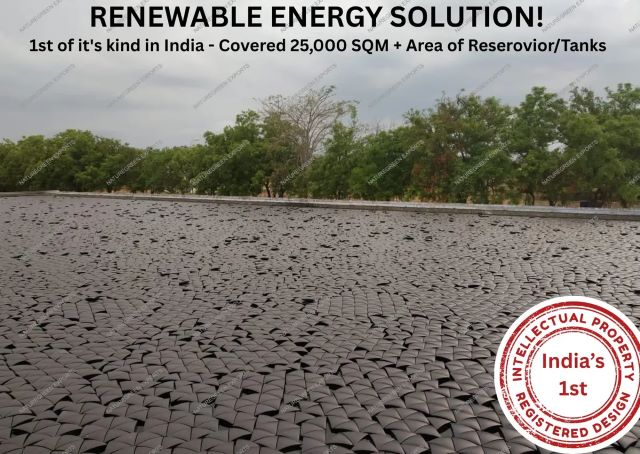
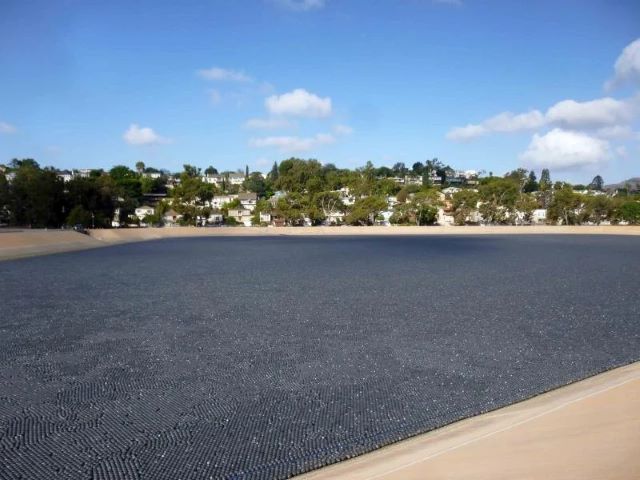
Rather than continually dosing chemicals to kill algae after it grows, the superior engineering approach is to starve the algae of photosynthetic energy. By covering the water surface with an opaque, UV-stabilized barrier, solar PAR radiation is physically blocked from penetrating the water column.
Without sunlight, photosynthesis ceases completely within 7 to 14 days. Existing algae dies off naturally and cannot regenerate, maintaining crystal-clear water with minimal organic carbon loading.
Key engineering requirements for an effective algae-control cover:
- Light Transmission: <1% optical light penetration across the entire PAR spectrum.
- Surface Coverage: >90% to 95% total surface blanketing to prevent light leakage at margins.
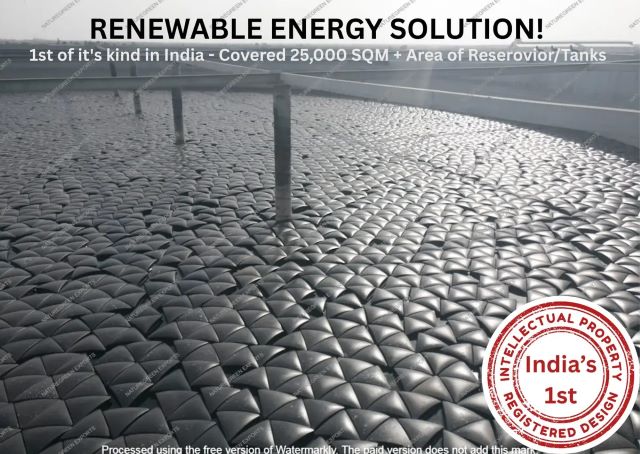
- Gas Permeability: Symmetrical modular gaps to allow natural atmospheric gas exchange and prevent liquid stagnation.
Learn more about purpose-engineered Algae & Evaporation Control Covers.
4. Operational Benefits for Water Treatment Facilities
Deploying physical light-blocking floating covers on WTP raw water basins yields immediate, measurable operational improvements:
- Filter Run Times Extended by 300%+: Eliminating suspended algal biomass reduces filter bed head loss, extending sand and carbon filter run cycles from 8–12 hours to 36–48+ hours.
- Backwash Water Volume Slashed: Fewer backwash cycles save millions of litres of treated process water annually, directly boosting net plant throughput.
- Coagulant & Disinfectant Savings: Lower organic loading reduces alum/PAC dosage by 20%–40% and cuts chlorine demand by up to 50%.
- Simultaneous Evaporation Control: The same floating blanket reduces evaporative water loss by 70% to 85%, preserving valuable stored water inventory.
5. Implementation & Material Selection Guidelines
When selecting floating covers for potable water or industrial WTP basins, material purity is paramount. Covers must be manufactured from 100% virgin High-Density Polyethylene (HDPE) compounded with certified food-grade carbon black UV stabilizers. Regrind or recycled plastic fillers must be strictly avoided to prevent chemical leaching or volatile organic contamination into the water stream.
For dedicated problem-solution engineering, review our comprehensive guide on Algae Growth Control & Water Quality Preservation Solutions.
Key Engineering Takeaways
- Algae proliferation in raw water storage requires sunlight (PAR 400–700 nm), which triggers severe filter clogging and elevated TOC.
- Chemical dosing (copper sulfate, pre-chlorination) creates hazardous disinfection by-products and recurring operational costs.
- Physical floating covers blocking 95%+ of sunlight permanently eliminate algae growth at the source without chemicals.
- WTP facilities experience 300%+ longer filter run times and save millions of litres in reduced backwash water.
Frequently Asked Questions
In typical raw water reservoirs, existing active algae dies off within 10 to 14 days after light deprivation, after which the water column remains permanently clear.
No. NatureGreen algae control covers are manufactured from 100% virgin polymer without recycled fillers, ensuring zero chemical leaching or water quality degradation.
Yes. Modular floating tiles can be installed in the stagnant clarifier zones while maintaining clearances around center rotating mechanisms.
Eliminate Algae in Your Water Treatment Basins
Request a customized algae control assessment and technical sizing report for your WTP storage tanks and raw water basins.
Related Technical Insights