Industrial water security requires proactive surface protection over raw water lagoons, process retention basins, and emergency cooling ponds. While leaving reservoirs uncovered is historically common, the resulting evaporative water losses, biological fouling, and thermal degradation present severe operational risks. When evaluating surface blanketing options, engineering teams must weigh modular floating covers, hollow plastic spheres, continuous tensioned geomembranes, and structural roofs against capital cost, wind stability, and maintenance overhead.
1. The Hidden Costs of Uncovered Reservoirs
Leaving an industrial water reservoir uncovered exposes liquid inventory to environmental degradation. In tropical and arid climates, solar energy input continuously drives water loss while ambient dust, airborne spores, and bird droppings introduce contaminants into process water streams.
The cumulative losses include:
- Continuous Volumetric Loss: Up to 15% to 30% of total reservoir capacity lost directly to the atmosphere annually.
- Chemical Treatment Escalation: Accelerated algaecide, biocide, and coagulant demand to combat organic blooms in clarifiers and WTP holding basins.
- Wildlife Intrusion & Waterfowl Landing: Toxic chemical and tailings lagoons attract migratory birds, causing environmental liability and ecological damage.
2. Core Surface Blanketing Technologies Evaluated
Modern industrial cover engineering encompasses four primary methodologies:
A. Modular Interlocking Triangle Floating Covers
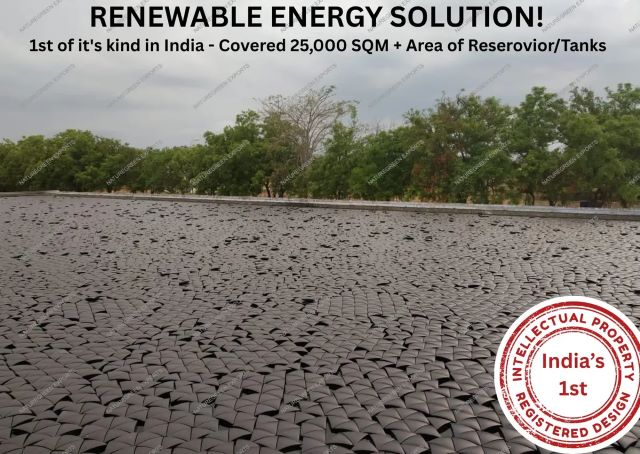
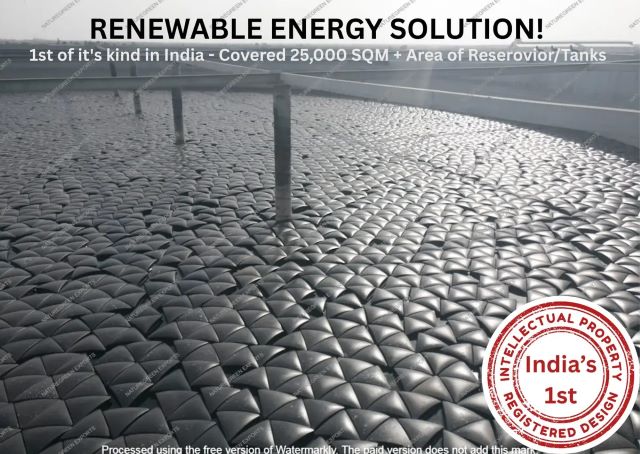
Constructed from virgin high-density polyethylene (HDPE) with carbon black UV inhibitors, these symmetrical hollow tiles float directly on the liquid surface (~35 units/m²). As water levels rise and fall, the tiles slide seamlessly over one another, maintaining continuous 90%–95% surface blanketing without edge anchors. Explore technical specs for Hollow Triangle Floating Covers.
B. UV-Stabilized Hollow Floating Spheres (100mm HDPE Balls)
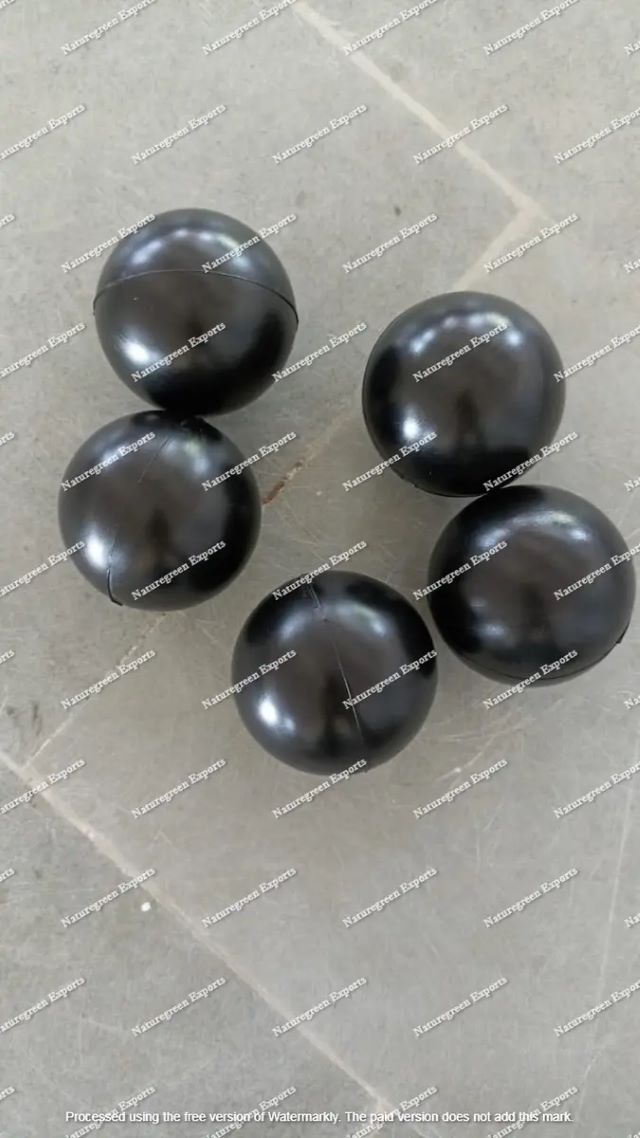
Hollow floating spheres form a self-arranging matrix across open ponds (typically 116 balls/m² for a single layer or 232 balls/m² for double staggered layers). Their spherical geometry naturally deflects wind shear and accommodates agitators, aerators, and irregular bank slopes. Review sizing on 100mm HDPE Hollow Balls.
C. Continuous Tensioned Geomembrane Covers
Large fabricated sheets of reinforced polypropylene (RPP) or HDPE welded across the basin perimeter and anchored into concrete trenches. While providing near-100% sealing, continuous membranes require elaborate rainwater dewatering pumps, internal weighted ballasts, and specialized maintenance crews to patch tears.
D. Rigid Clear-Span Structural Roofs
Steel trusses or aluminum geodesic domes supporting corrugated metal or fiberglass cladding. While completely enclosing the reservoir, structural roofs require massive capital expenditures (often 5×–10× higher than floating solutions) and extensive civil foundations.
3. Side-by-Side Technical Specification Matrix
| Evaluation Parameter | Modular Triangle Covers | Hollow Floating Balls | Continuous Geomembrane | Structural Steel Roof |
|---|---|---|---|---|
| Surface Coverage Ratio | 90% – 95% | 91% (Single) / 98% (Double) | 98% – 100% | 100% |
| Evaporation Suppression | 70% – 85%+ | 75% – 90% | 90% – 95% | 95% – 99% |
| Wind Resistance Rating | >100 km/h (Interlocking) | >80 km/h (Self-ballasted) | Moderate (Risk of billowing) | Very High (Engineered truss) |
| Civil Modifications Needed | None (Direct drop-in) | None (Direct pouring) | Anchor trenches & concrete berms | Heavy concrete pilings & footings |
| Stormwater Management | Automatic drainage between tiles | Automatic drainage through matrix | Requires sump pumps on top | Gutter drainage system |
| Expected Service Life | 10 – 15+ Years | 10 – 15+ Years | 5 – 8 Years | 20+ Years |
| Relative Capital Cost | Low – Moderate | Low – Moderate | Moderate – High | Very High (5× to 10×) |
4. Installation Dynamics & Civil Infrastructure Requirements
A critical consideration in operational industrial facilities is installation downtime. Draining an active raw water reservoir to construct concrete footings or excavate perimeter anchor trenches disrupts production cooling and process supply.
Modular systems eliminate downtime entirely:
- Drop-in Deployment: Triangle covers and floating spheres are poured directly onto the water surface while the reservoir remains in full continuous operation.
- Self-Adjusting to Geometry: Modular units naturally navigate around intake towers, floating pumps, level sensors, and angled riprap embankments without custom cutting or onsite heat welding.
- Sludge Cleaning & Desludging: During periodic basin maintenance, floating modular covers can easily be pushed aside or suctioned out and re-deployed without material damage.
5. Decision Framework for Plant Engineers
When selecting the ideal cover system for your plant, use this practical framework:
- For Large Open Reservoirs & Evaporation Control: Interlocking Triangle Floating Covers provide maximum aerodynamic stability and verified 70%–85% water conservation.
- For Small-to-Medium Basins with Internal Obstructions: HDPE Hollow Floating Balls deliver seamless fluid movement around aerator shafts and intake pipes.
- For Toxic Biogas Containment (Anaerobic Digesters): Continuous sealed geomembranes remain necessary where positive pressure methane capture is required.
Key Engineering Takeaways
- Uncovered reservoirs suffer severe continuous water loss, mineral concentration, and biological fouling.
- Modular floating covers eliminate civil construction downtime, rainwater accumulation pumps, and perimeter anchoring costs.
- Both triangle covers and hollow balls deliver 10–15+ year tropical service lives with zero maintenance.
- Interlocking triangle geometry achieves superior wind resistance (>100 km/h) compared to continuous membranes.
Frequently Asked Questions
No. NatureGreen triangle floating covers are engineered with independent buoyancy chambers and natural inter-tile drainage channels, allowing monsoon rainwater to flow directly into the reservoir without ponding on top.
Quality industrial balls (such as NatureGreen 100mm HDPE spheres) feature precise wall thickness and internal self-ballasting dynamics, preventing wind blowout and ensuring the blanket remains intact.
Based on municipal water tariffs and industrial raw water procurement costs, typical capital payback periods range between 12 and 18 months.
Explore Engineered Reservoir Cover Solutions
Consult with NatureGreen engineering specialists to select the optimal floating cover system for your reservoir dimensions and climatic conditions.
Related Technical Insights